Taste, Hardness and Lead Lines in Neighboring Massachusetts Towns
A short drive can bring a noticeable change in tap water: a different taste, more spots on glassware, or a concern about old pipes. Those differences can have several causes, and appearance or taste alone cannot answer whether a home has a lead service line. Here’s how to compare neighboring Massachusetts towns’ water information and decide what to check at your own address.
Why tap water can differ between neighboring towns
A town line may also mark a change in water supplier, source, treatment, or distribution pipes. Even where the water entering homes is similar, plumbing inside a particular building can affect what comes out of its faucets. That means a neighbor’s water experience can be useful context, but it is not a substitute for checking the supplier and plumbing that serve your own home.
Some differences are easy to notice. Water may taste more or less like chlorine, leave more mineral residue, or look different after work on nearby pipes. Other differences cannot be reliably detected by taste, smell, or appearance. Lead is a key example: water that looks and tastes normal can still come into contact with lead-bearing plumbing.
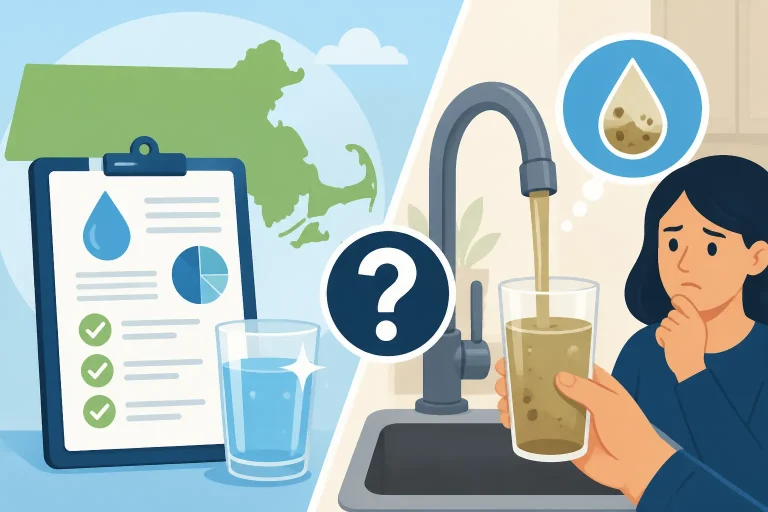
A town’s annual water report is a helpful starting point for understanding the public supply. According to the Massachusetts Department of Environmental Protection, all community public water systems must prepare and provide an annual Consumer Confidence Report to their customers. A Public Water Supplier must provide an Annual Consumer Confidence Report about water quality. The report can help you understand the supplier’s water and reported test results, but it is not a test of the water at every home’s faucet.
Start by identifying who supplies water to your address. A town can have more than one water supplier, and a municipal boundary does not always tell you which system serves a particular building. If you rent, ask the property owner or manager, check a water bill, or contact the supplier to confirm. Which Utility Actually Serves a Massachusetts Renter’s Address? offers more detail on confirming service.
When comparing towns, look beyond the name of the community. Find the supplier’s latest report, check its water source and treatment information, and compare the topics that matter to you. If the report is difficult to interpret, How to Find and Read Your Massachusetts Consumer Confidence Report can help you locate and understand its main sections.
| What you notice | What it might relate to | What it cannot establish |
|---|---|---|
| Different taste between towns | Source water, treatment, or plumbing in a building | Whether a home has a lead service line |
| Mineral spots or scale | Water hardness and household plumbing or appliances | Whether the water contains lead |
| A change after nearby pipe work | Local distribution conditions or plumbing changes | Whether the cause is inside or outside your home |
| Water that looks and tastes normal | It may simply have no noticeable change | That lead or another contaminant is absent |
| Different results in neighboring reports | Different suppliers, sources, or sampling information | The exact quality of water at your own faucet |
The table is a way to sort questions, not diagnose a water problem. For example, a change in taste may be worth reporting, but it does not prove that the public supply has changed. And a report that describes a town’s supply cannot settle what is happening in a particular kitchen’s pipes.
Taste differences: what they may tell you
Taste is one of the first things people notice when they cross from one town’s water system into another. A difference may be mild or pronounced, and some people notice it more than others. Water can have a chlorine-like, earthy, metallic, or otherwise unfamiliar taste. Those descriptions are useful when you report a concern, but taste alone cannot identify its source.
The water supplier’s source and treatment can contribute to differences in taste. So can plumbing between the water main and the tap, including the plumbing in a home or apartment building. A change that affects only one faucet points to a different set of possible causes than a change that appears throughout a building or across a neighborhood. This is not a diagnosis: it is a practical way to narrow down whom to ask and what to describe.
Pay attention to the pattern:
- One faucet tastes different: The faucet, its fittings, or nearby indoor plumbing may be relevant. If the taste persists, describe which faucet is affected and whether other taps seem normal.
- Several faucets in one building are affected: Consider whether the change may relate to building plumbing or to water entering the property. Ask the landlord or property manager and contact the supplier if the concern continues.
- Nearby homes notice the same change: A wider supply or distribution issue may be worth checking with the water supplier. Ask whether it is aware of a change or work in the area.
- The taste changes suddenly: Note when it began and whether it appeared after plumbing or street work. A sudden change does not, by itself, identify the cause.
If the water also has an unusual color or odor, keep those observations separate from the taste description. Be specific about when the change occurs, which taps are affected, and whether it is constant or intermittent. When Massachusetts Tap Water Looks, Smells or Tastes Off: A Guide covers practical steps for describing and following up on those changes.
The supplier’s report can provide background, but it is not a household plumbing inspection. A townwide or systemwide result may not capture conditions in a particular building, at a particular faucet, or in the pipes between the public water main and the home. If the question is whether a taste points to a specific contaminant, do not assume that a sensory description can confirm it. Ask the supplier what information it has and whether testing is appropriate for the concern.
A filter is not a universal fix for an unexplained taste. Before buying or installing one, identify the issue you want to address and check whether the selected product is certified to reduce that specific substance. A filter intended to improve taste should not be treated as evidence that lead or another concern has been addressed. Matching a Water Filter to the Problem in a Massachusetts Home explains why matching a product to a confirmed need matters.
Hardness: why spots and soap feel different
Hardness describes minerals dissolved in water, particularly calcium and magnesium. These minerals can affect how water behaves in a home. People often notice hardness through residue on fixtures, spots on dishes, or a different feel when washing with soap. Those signs can be frustrating, but they do not indicate lead.
Hardness can vary among water supplies, including supplies in neighboring towns. The source of the water and the way it is managed can help explain why one household notices more mineral residue than another. But the pattern may also be affected by household plumbing, appliances, cleaning habits, and what a person is used to. A neighbor’s experience is a clue to ask about, not a measurement of your water.
Look for hardness information in the supplier’s report or ask the supplier whether it has data for the water serving your address. If you are on a private well rather than a community public water system, a municipal report will not describe your well water. You will need information based on your own supply. Is Massachusetts Tap Water Hard or Soft, and Does It Vary by Utility? provides more context on differences in hardness among supplies.
A home water test can help establish whether hardness is present at a level relevant to your household needs. The right test depends on what you are trying to find out, and testing for hardness is not the same as testing for lead. If lead is your concern, a hardness result cannot confirm or rule out lead in the water.
A softener may be appropriate for some hardness-related concerns, but it is not a general-purpose water filter. Consider whether the issue is genuinely hardness, whether it affects daily use, and what ongoing maintenance the equipment would require. Check the supplier’s information before choosing treatment, and make sure any product’s claims match the problem you want to address. Water Softeners in Massachusetts, From Hardness Tests to Sodium discusses the questions to weigh before choosing one.
Hardness can also make neighboring homes seem more different than their supplier data suggests. A home with older plumbing or different fixtures may show residue differently from a nearby home. Conversely, visible spots do not prove that the water is unusually hard. If the difference matters enough to consider equipment, use relevant test information rather than appearance alone.
Most importantly, do not use hardness as a proxy for water safety. Hard water may be inconvenient, while lead can be present without an obvious taste or appearance. These are separate questions, and they call for separate information.
Lead lines: a town report cannot settle a home’s pipe material
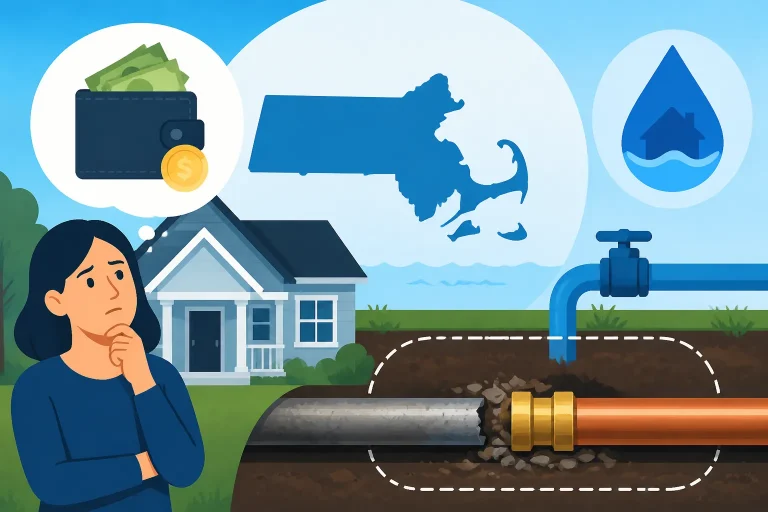
A home’s service line is the pipe connecting the property to the public water system. Lead can enter drinking water through lead-bearing plumbing. According to the Massachusetts Department of Environmental Protection, lead contamination often comes from lead water service pipes connecting a home to the water system. Indoor plumbing and fixtures can also be relevant, so knowing the service-line material is important but does not answer every question about the water at a tap.
A townwide report and a service-line record serve different purposes. The report describes information about the public water system and its water quality. A service-line inventory is about recorded pipe materials. Neither should be treated as a guarantee of what a particular faucet delivers.
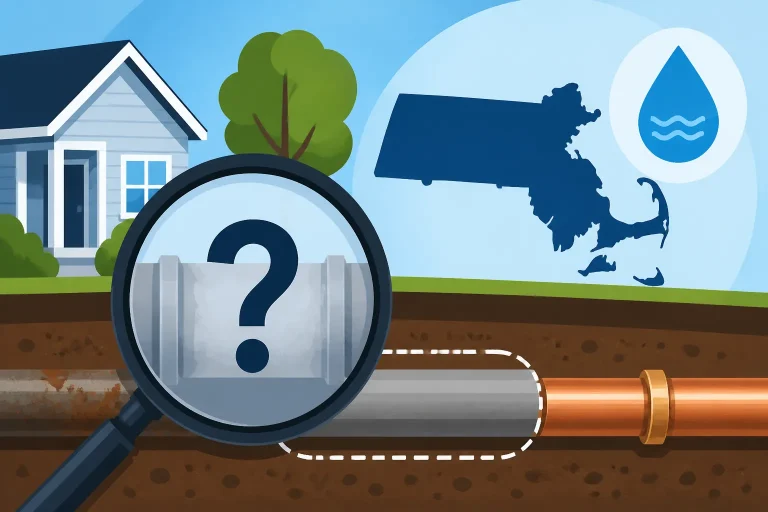
MassDEP says inventory service-line materials must be classified as Lead Galvanized Requiring Replacement (GRR) Non Lead (for example: Copper) Lead Status Unknown. These labels describe the recorded classification of the service-line material. “Lead Status Unknown” does not mean the pipe is confirmed to be lead, but it does mean the record has not established that it is non-lead. A “Non Lead” classification refers to the recorded line material; it does not establish that every part of a home’s plumbing is free of lead.
If you do not know your service-line material, ask the water supplier or local water department what it has on record for your address and how to find out more. According to the Massachusetts Department of Environmental Protection, residents can call their local water department to find out whether their home has a lead service line. You can also use the supplier’s inventory if one is available, while keeping in mind that a record may be incomplete or may describe only the service line rather than the plumbing inside the building. How to Check Your Address for a Lead Service Line in Massachusetts and Seeing Your Supplier’s Service Line Inventory in Massachusetts explain how to follow that paper trail.
If you have received a notice about the service-line material, read the exact category and ask what it means for your property. A record marked “unknown” is not a water-test result. A record marked “non-lead” is not a test of the water at your kitchen tap. And a lead-line designation is a reason to seek address-specific guidance rather than infer a water concentration from the label alone. What Unknown Means in a Massachusetts Service Line Inventory describes what that status can and cannot tell you.
If you want to know whether lead is present in water at a particular tap, ask the supplier what testing options may be available and what a test would cover. Sampling details matter, and an inventory is not a substitute for a water sample. A result from a particular sample also has limits: it describes that sample under its collection conditions, not necessarily every faucet or every moment. For broader context, see Does a Service Line Inventory Show Whether Your Tap Water Has Lead?.
Do not rely on taste, odor, color, or hardness to assess lead. Those observations can help describe a water change, but they cannot establish whether lead is present. If you are concerned about possible exposure or health effects, ask your local health department or a medical professional for advice. For water-system and service-line information, contact the supplier or local water department through its official website.
A practical way to compare towns and follow up
Comparing water from neighboring towns works best when you separate the questions. Is the difference about taste? Is it about hardness? Are you trying to establish whether the service line is lead? Each question needs different information. A taste comparison cannot answer a lead-line question, and a supplier report does not measure hardness or lead at every household tap unless it specifically provides information relevant to that question.
Use a consistent process:
- Confirm the supplier for each address. Do not assume the town name identifies the system. Check a water bill or ask the supplier or property manager.
- Find the latest available water report. Compare reports from the actual suppliers rather than relying on broad descriptions of a town. All community public water systems must prepare and provide an annual Consumer Confidence Report to their customers, according to the Massachusetts Department of Environmental Protection.
- Compare similar information. Look at the report’s source, treatment, and water-quality results. Check what each result refers to and whether the reports describe comparable information. Comparing This Year’s Water Report With Last Year’s: What Changed? can help you review changes within a supplier’s reports.
- Describe the household pattern. Note whether the issue affects one faucet, several taps, one building, or nearby homes. Record the taste, odor, or appearance as an observation, not as a diagnosis.
- Ask about the service-line record separately. Contact the water supplier or local water department about the material recorded for your address. If the status is unclear, ask what the supplier recommends as the next step.
- Choose testing or treatment based on the question. A test should be selected for the concern you want to investigate. If you are considering treatment, check that the product is certified for the specific contaminant or property you want it to reduce.
If you rent, tell the landlord or property manager about a persistent change or a service-line notice, and ask the supplier for information that applies to the building. A tenant may not be able to inspect or alter plumbing, but can still ask what the supplier has on record and whether the property has received a notice. Rental Water Quality Worries: Tell the Landlord, the Supplier or Both? covers how to think through those conversations.
If a problem seems limited to your home, focus the questions on the building’s plumbing, service-line material, and any relevant water test. If multiple homes report a similar change, contact the supplier and ask whether it has information about the area. A neighbor’s report can help identify a pattern, but it cannot establish the cause or prove the water is the same at each address. Is It Just Your House? Sorting Out a Massachusetts Tap Water Problem offers a framework for distinguishing a household concern from a wider one.
The goal is not to make every town’s water taste the same. It is to understand what differs, identify which part of the system may be involved, and use information that matches the question. Supplier reports are useful for the public system; service-line inventories are useful for recorded pipe materials; household testing may be relevant to water at a tap. Treating those as separate tools makes it easier to avoid both false reassurance and unnecessary alarm.
Frequently Asked Questions
Does a different taste mean the neighboring town has unsafe water?
No. Taste can change for several reasons, and it cannot establish whether water is safe or identify a contaminant. Check the supplier’s report and ask the supplier about a persistent or sudden change.
Can hardness show whether a home has lead pipes?
No. Hardness and service-line material are different issues. Mineral residue or a soft-water feel cannot confirm or rule out a lead service line.
Does an annual water report describe the water at my faucet?
It describes information about the public water system, not a test of every household tap. Your building’s service line and indoor plumbing can affect water after it leaves the public system.
How can I find out whether my home has a lead service line?
Ask the water supplier or local water department what is recorded for your address. The Massachusetts Department of Environmental Protection says residents can call their local water department to find out whether their home has a lead service line.
Sources
- Massachusetts Department of Environmental Protection (checked November 13, 2026)
- Massachusetts Department of Environmental Protection (checked November 13, 2026)
- Massachusetts Department of Environmental Protection (checked November 13, 2026)
- Massachusetts Department of Environmental Protection (checked November 13, 2026)
Disclaimer
This article is for general informational purposes only and does not constitute professional advice. Laws, prices and regulations vary by location and change over time. Consult a qualified professional for guidance on your specific situation. Massachusetts Water Guide is not a government agency or water utility and is not affiliated with any public water system.