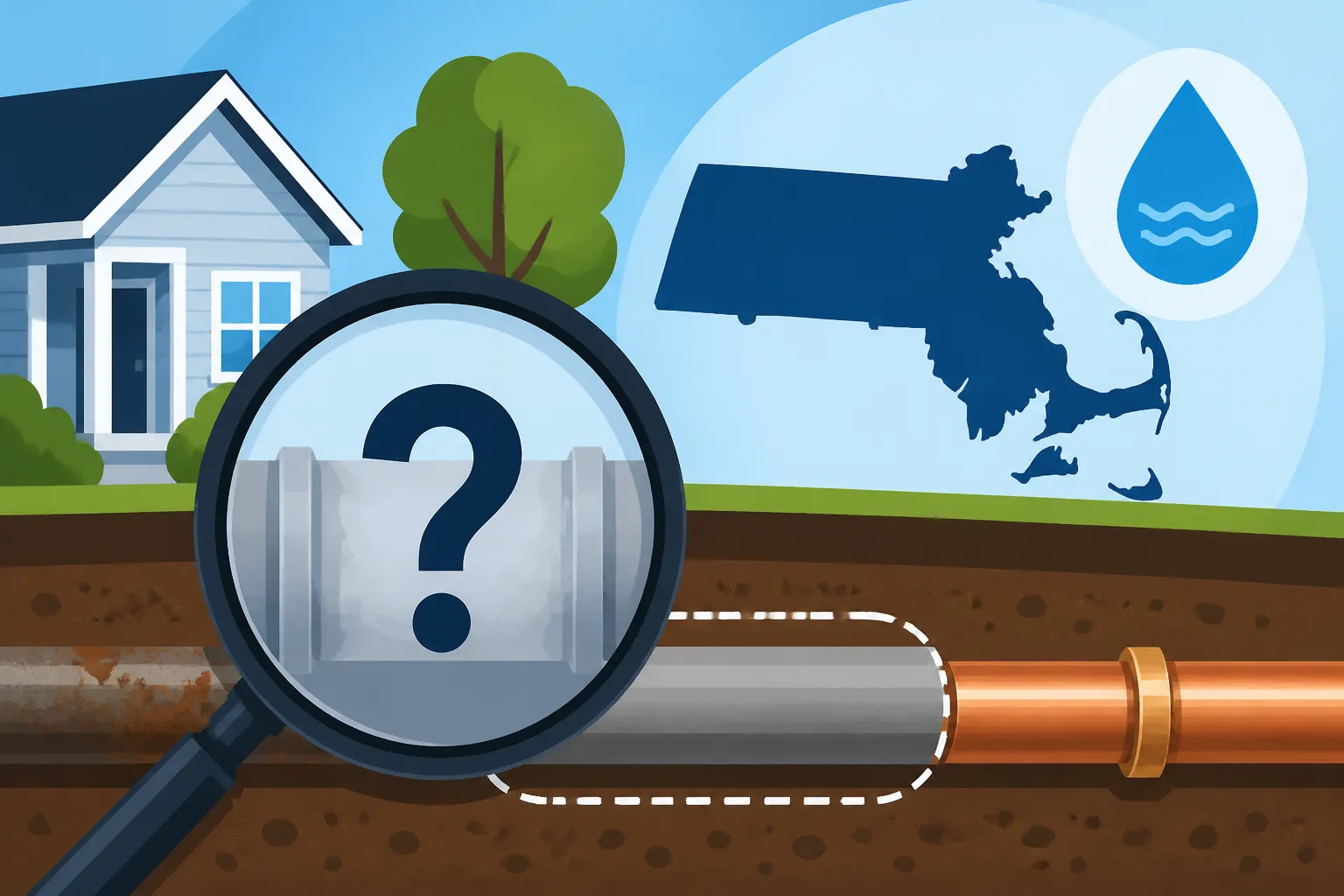
What Unknown Means in a Massachusetts Service Line Inventory
An unknown entry in a Massachusetts service line inventory can sound like a warning that lead is present. It does not say that. It means the pipe material has not been confirmed in the inventory. Here’s how to interpret the label, what the inventory can and cannot tell you, and what to ask your water supplier next.
What “lead status unknown” means
A service line is the pipe that carries water between a water main and a building. An inventory records what is known about the material of those pipes. If your address is listed as lead status unknown, the material for the relevant service line or part of it has not been verified in the inventory.
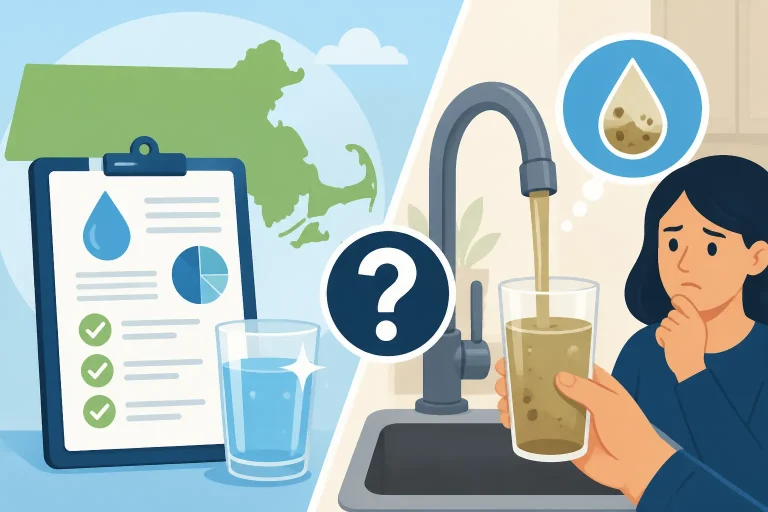
That is different from a confirmed lead classification. It is also different from a water test result. The label does not establish that the water at your tap contains lead, and it does not establish that the pipe is lead-free. It records uncertainty about the pipe material.
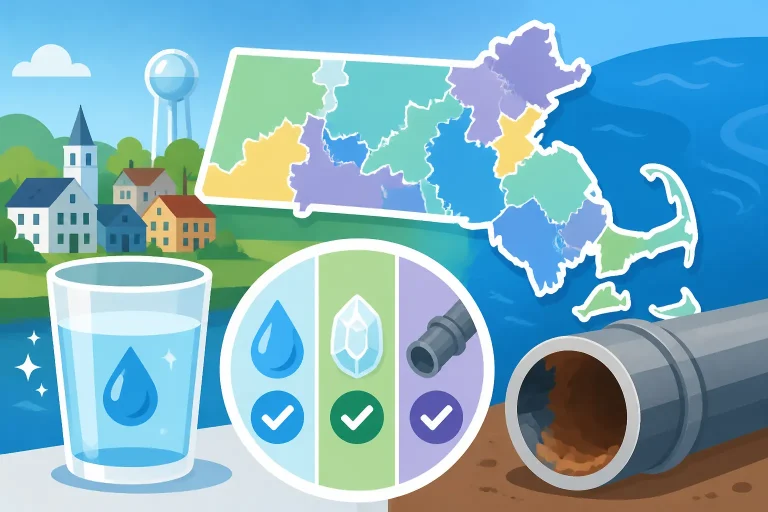
The Massachusetts Department of Environmental Protection says service-line materials must be classified as Lead Galvanized Requiring Replacement (GRR) Non Lead (for example: Copper) Lead Status Unknown. The categories describe the recorded status of the pipe material, not a lab result from a kitchen faucet.
| Inventory label | What it tells you | What it does not tell you |
|---|---|---|
| Lead | The inventory identifies the service line material as lead. | It does not provide a home-specific tap-water test result. |
| Galvanized Requiring Replacement (GRR) | The inventory uses this category for a galvanized line requiring replacement. | It does not by itself say what a test of your tap water would find. |
| Non Lead (for example: Copper) | The inventory identifies the material as non-lead, with copper as an example. | It does not describe every pipe or fixture inside the building. |
| Lead Status Unknown | The material has not been verified in the inventory. | It does not confirm either lead or non-lead material. |
An unknown entry can apply to the entire service line or to a particular portion. A line may connect the public water main to a building, and the materials may differ along its route. Ask the supplier to clarify which segment is unknown and whether the inventory is describing the public-side portion, the property-side portion, or both.
The word “unknown” is important: it is a statement about the state of the record, not a finding that the pipe is safe or unsafe. If you want to understand how inventories are assembled and what each label communicates, see Location, Material, Install Year: What Massachusetts Inventories List. For the broader requirements suppliers must communicate, What Massachusetts Water Reports Must Say About Service Lines offers useful context.
Why a service line can remain unknown
A supplier may have older records that do not identify pipe material, incomplete documentation, or records that cannot be tied confidently to the particular line serving an address. A line may have been installed or repaired before reliable material information was recorded. Records can also describe only part of a route, leaving another portion unresolved.
An entry may therefore remain unknown even when a supplier has looked through available files. The Massachusetts Department of Environmental Protection says records review is the only required method PWS must use when they create their initial service line inventory. That describes the required verification method for the initial inventory; it does not mean every listed pipe was physically inspected or that records necessarily settle every address.
This distinction helps explain why an inventory can be useful without being conclusive. A supplier may have assembled the best available information from its records, yet still lack enough evidence to classify a particular line as lead, galvanized requiring replacement, or non-lead.
An unknown status does not, by itself, explain why the record is incomplete. To find out what is behind the label on your address, ask the supplier:
- Which part of the service line is listed as unknown?
- What records were available for that part?
- Does the inventory identify a material for another segment of the line?
- Has the supplier documented any inspection or other follow-up for this address?
- What would the supplier need to change the classification?
The supplier may be able to explain whether the entry reflects missing records, conflicting information, or another unresolved detail. Do not assume that an unknown entry means no investigation has occurred, or that an entry will change automatically. Ask what the supplier’s current record shows and what steps, if any, it can take to clarify it.
For a closer look at the way an inventory may describe material and location, see Seeing Your Supplier’s Service Line Inventory in Massachusetts. If the notice you received specifically says the status is unknown, Got a Lead-Status-Unknown Service Line Notice? What It Really Means focuses on the same kind of notification.
What the inventory can and cannot tell you
A service line inventory answers a narrow question: what material does the supplier’s record assign to the service line, and how certain is that classification? It can help residents identify addresses where information is incomplete and understand what the supplier has recorded. It can also point to a reason to ask for further information.
It is not a household water test. It does not measure lead at the tap, and it does not describe every source of lead that might exist in a building’s plumbing. Pipes inside a home, older fixtures, solder, and other plumbing components are separate from the service-line material listed in an inventory. A service-line entry should not be treated as a complete assessment of all plumbing between the main and the faucet.
The reverse is also true: a non-lead service-line classification does not establish the material of every pipe and fixture inside the building. If your concern is specifically about water at a faucet, the inventory and a tap-water test answer different questions. Does a Service Line Inventory Show Whether Your Tap Water Has Lead? explains the distinction in more detail.
A test also has limits. A result describes the sample collected under the conditions used for that test; it does not rewrite the supplier’s service-line records or identify every pipe material in a building. If you need both kinds of information, ask separately about the inventory status and the appropriate way to arrange a water test. You can read about a home-specific approach in Getting a Home-Specific Lead Answer for Your Massachusetts Tap.
The inventory is still worth checking even though it is not a tap test. It may help you learn whether the supplier has recorded a material, whether a portion remains uncertain, and whom to contact for clarification. Treat it as one piece of information, not as a complete answer about water quality.
Keep the wording of any notice or inventory entry. If you contact the supplier, refer to the exact address and the exact label shown. If the address appears under a landlord’s or building manager’s account, you can still ask the supplier how residents can obtain information about the service-line record. For renters, Renters and Massachusetts Tap Water: Notices, Lead Lines and Reports explains questions that may arise when a notice concerns a rental home.
What to do after finding an unknown entry
Start by confirming that the inventory entry is for your exact address. A town or neighborhood may have more than one supplier, and a property’s water provider may not be obvious from its location alone. If you are uncertain which supplier serves the building, Which Utility Actually Serves a Massachusetts Renter’s Address? can help frame the search.
Then contact the supplier using its official website to find current contact details. Ask for an explanation of the unknown designation, not just whether the inventory lists lead. In particular, ask whether the unknown status applies to the whole service line or only one segment. If the record identifies the material for one part, ask what is known about the remaining part.
You can also ask what information the supplier used and whether there is a way to provide additional documentation or arrange a follow-up review. Keep the response with the inventory entry, especially if it describes a segment, a record limitation, or a next step. If the supplier says it has no further information, ask how it will notify customers if the record changes.
A practical sequence is:
- Find the supplier’s inventory entry for the exact property.
- Note the material label and any location or segment details shown.
- Ask the supplier what part of the line remains unknown and what its records say.
- Ask whether any further verification or customer action is available.
- If your concern is the water at a faucet, ask separately about testing and how to interpret the result.
The inventory and water testing are separate routes to information. You may want to ask about both, but the right question depends on what you are trying to establish. If you want to know what material is recorded, ask the supplier about the line and its records. If you want information about water at the tap, ask about a suitable tap-water test. A Lead Pipe Warning Letter Is Not a Test Result, So Get a Real One discusses why a notice and a test result should not be confused.
A filter is not a way to determine what a service line is made of. If you consider treatment while seeking more information, first identify the contaminant you want to reduce and check that the product is certified for that specific purpose. The inventory label alone is not a water test and cannot establish which treatment is appropriate. Matching a Water Filter to Your Massachusetts Lab Results, Not to a Guess explains why test results should guide product selection.
If you rent or share a building
An unknown entry can raise extra questions in a rental or multi-unit property. The supplier’s inventory may identify the service line serving the building, while the building’s internal plumbing is a separate matter. A resident may not have access to pipe records, maintenance paperwork, or the physical areas where plumbing can be inspected.
Start by sharing the exact inventory wording with the landlord or property manager and asking whether they have information about the service line or the building’s plumbing. You can also ask the supplier what information it can provide directly to residents. If the supplier directs you to the property owner for access or records, keep the request specific: ask about the unknown segment, any available documentation, and whether the building has had a relevant water test.
A landlord’s response about the pipe material and a supplier’s inventory entry may cover different parts of the system. Make clear whether you are asking about the line from the main, the building’s internal plumbing, or water at a particular tap. If the concern is the water at the tap, ask how a test can be arranged and who can authorize access to collect a sample.
Avoid treating a building-wide statement as a home-specific result. A notice about a service-line classification does not test every faucet, and a result from one tap may not describe another. If you receive a test result, read what location and sampling conditions it covers, and ask the testing provider or supplier what the result can reasonably establish.
If the label changes or you receive a follow-up notice, compare the wording with the earlier record. A changed classification may clarify the line material, but it still does not substitute for a tap-water result. For background on line records and notices for tenants, see Worried About Lead in a Rental? Both Tenant and Owner Get the Notice.
Frequently Asked Questions
Does lead status unknown mean my water contains lead?
No. It means the service-line material has not been confirmed in the inventory. It is not a tap-water test result and does not establish whether lead is present in water at your faucet.
Does unknown mean the supplier has not checked its records?
Not necessarily. The Massachusetts Department of Environmental Protection says records review is the only required method PWS must use when they create their initial service line inventory. An entry can remain unknown when available records do not establish the material.
Should I ask for a water test?
If you want information about water at your tap, ask the supplier or a qualified testing provider how to arrange an appropriate test. A water test addresses a different question from the service-line inventory, which records the pipe material as known or unknown.
Can a non-lead service-line entry rule out lead elsewhere in the building?
No. The inventory classification concerns the service line. It does not identify every pipe, solder joint, or fixture inside a building. Ask about those components separately if they are part of your concern.
Who should I contact about an unknown entry?
Contact the water supplier serving the property and ask which part of the line is unknown, what records support the entry, and whether further verification is available. Use the supplier’s official website to find current contact details.
Sources
- Massachusetts Department of Environmental Protection (checked November 13, 2026)
Disclaimer
This article is for general informational purposes only and does not constitute professional advice. Laws, prices and regulations vary by location and change over time. Consult a qualified professional for guidance on your specific situation. Massachusetts Water Guide is not a government agency or water utility and is not affiliated with any public water system.