Does the Town Water Report Reflect What Comes Out of Your Faucet?
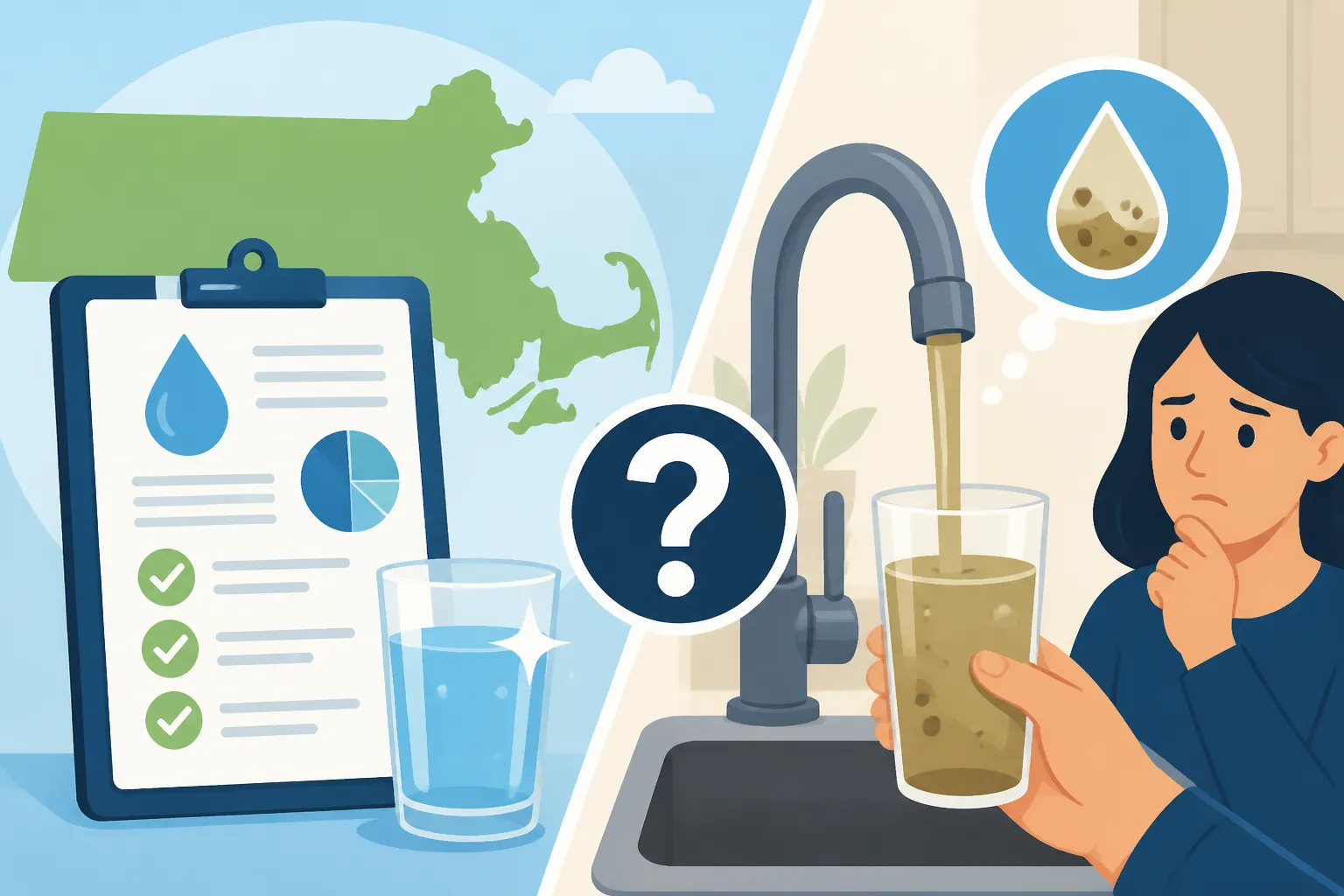
A Massachusetts town water report can look reassuring while a faucet tastes different, or show a detection that sounds alarming. The report is useful, but it describes monitored water across a system—not necessarily the water in your kitchen glass. Here’s how to read what it can tell you, understand its limits, and decide what to check next.
What a town water report can and cannot tell you
A town water report, often called a Consumer Confidence Report, summarizes information about a public water system’s water quality. It can help you understand what the supplier monitors, what was detected in its samples, and whether the report identifies a water-quality concern. It is a valuable starting point, but it is not a test of every household’s tap.
That distinction matters because water travels through a network before reaching your glass. The report’s results relate to the samples collected for the system’s monitoring. Your faucet is at the end of a particular route that may include a water main, a service line, and the plumbing and fixtures inside your building. The report cannot, by itself, describe every part of that route or confirm the result at a particular tap.
Start by checking that you have the report for the supplier that serves your address. A town may have more than one supplier or water source, and a regional supplier’s results may not tell the whole story about local pipes. If you are not sure which supplier applies to your home, Which Utility Actually Serves a Massachusetts Renter’s Address? can help you sort out where to begin. For a step-by-step approach to locating and reading the report, see How to Find and Read Your Massachusetts Consumer Confidence Report.
Once you have the right report, look at what it says about the water system as a whole. Pay attention to the substance, the reported result, the relevant benchmark or standard explained in the report, and any accompanying note about the result. Don’t treat a detection as a conclusion on its own. According to the Massachusetts Department of Environmental Protection, Detecting a substance does not necessarily mean the water is unsafe to drink.
A reported detection and an unsafe result are not interchangeable. The meaning depends on the substance, the result, the applicable benchmark, and the explanation provided by the supplier. If the report identifies a violation or says that follow-up is needed, read the accompanying notice carefully. If you are unsure what a term or result means, ask the supplier to explain it. Detected Is Not Unsafe: Reading a Massachusetts Water Report Table offers more help with interpreting the difference.
The report also has limits that are easy to overlook:
| What the report can help show | What it does not establish by itself |
|---|---|
| What the supplier monitored and reported | The exact quality at every home faucet |
| Whether a substance was detected in the system’s samples | Whether the same result applies to your specific tap |
| What the report says about system-level compliance or follow-up | Whether water changed after entering your building’s plumbing |
| Whether the supplier provides information about lead sampling | Whether your home’s plumbing or service line contains lead |
| Where to find the supplier’s explanations and contact information | Whether a taste, smell, or color change comes from the supplier or your home |
This is not a reason to dismiss the report. It is a reason to use it for the question it is designed to address and to investigate separately when your concern is specific to your home.
Why water at one faucet can differ from the report
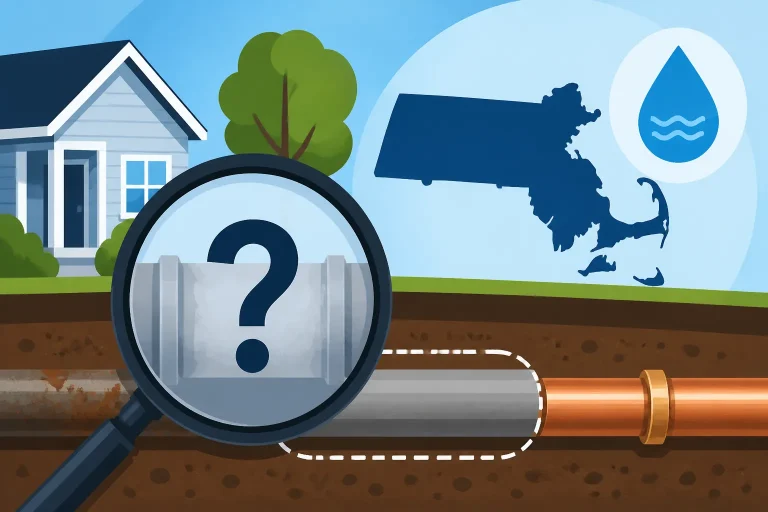
The water described in a system report has not necessarily followed the exact path to your faucet. After water reaches a property, the service line and indoor plumbing can affect what comes out of a particular tap. The plumbing materials, fixtures, and condition of the pipes can differ from one building to another, and even from one faucet to another within the same home.
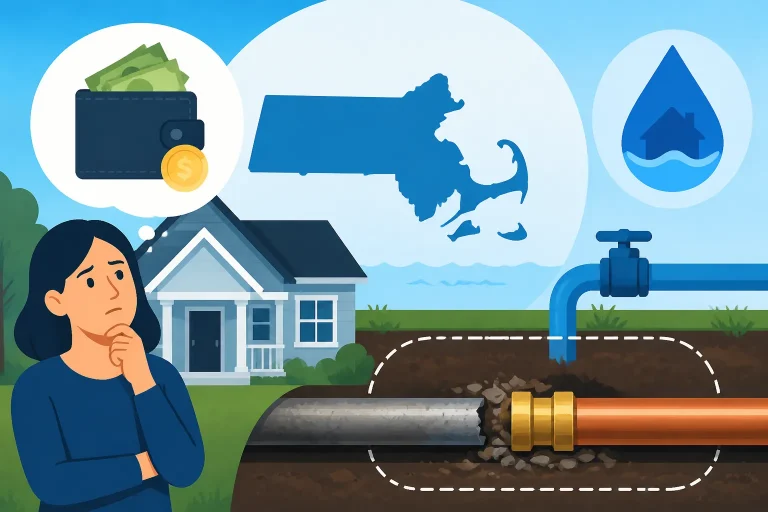
Lead is an especially important example of why system-wide information and household conditions are not the same thing. According to the Massachusetts Department of Environmental Protection, lead contamination often comes from lead water service pipes connecting a home to the water system. A report about the supplier’s monitoring cannot confirm the material of your home’s service line or establish a lead result for your kitchen tap.
Other differences may be more noticeable than a lab result. A change in taste, smell, color, or clarity can be limited to one tap or one building, or it may be noticed by people across a neighborhood. The pattern helps decide what to check, but appearance and taste alone do not identify a contaminant or prove that water is safe or unsafe. If something has changed, note when it started and whether it affects one faucet, several faucets, or nearby homes.
The building’s plumbing is one reason a town report may not match what a resident notices. Water can contact pipes and fixtures after it leaves the public system. A kitchen faucet may have a different history and plumbing route from a bathroom tap, and a rental building may have shared piping that is not obvious to a tenant. These possibilities are reasons to investigate, not a diagnosis of the cause.
A supplier report also cannot answer every question about a home’s water simply because it is detailed. It may contain extensive monitoring information, but that information still reflects the sampling and reporting described in the report. It does not become a household-specific test just because the address is in the town named on the document.
If the concern is about a taste or odor rather than a specific contaminant, consider whether it occurs at one faucet or throughout the home. When Massachusetts Tap Water Looks, Smells or Tastes Off: A Guide explains how to think through that difference. A problem limited to one fixture can point toward a different place to investigate than a change noticed across several homes, but the pattern alone cannot confirm the cause.
For a notice or an active change in service, the supplier’s current information matters more than an older annual report. An annual report is not a substitute for an alert about a current interruption, repair, or water-use instruction. If you think a service issue may be involved, Where to Get a Reliable Update on a Massachusetts Water Notice covers where to look for current information.
What the report says about lead—and what it leaves open
Lead is one of the clearest cases where a town report and a home-specific answer can differ. The supplier may be required to test tap water in selected homes, but those samples are not a test of every home in town. According to the Massachusetts Department of Environmental Protection, MassDEP requires local water departments to test tap water in a sample of homes that are likely to have high lead levels.
That sampling approach is designed to monitor water at homes considered more likely to show elevated lead. It does not mean the sample includes every building, every plumbing configuration, or every faucet. A result from the supplier’s sampling can tell you something about the monitored homes and the system’s results; it cannot certify that a particular household’s tap has the same result.
Nor does a town-level result answer what materials are present at your address. Lead may enter water through plumbing, including lead water service pipes. A home’s service line may be made of different material from a neighbor’s, and indoor plumbing can also vary. The supplier’s report and service-line records are useful pieces of information, but neither should be mistaken for a tap-water test at your home.
If the concern is lead, separate the questions:
- What does the report say about the system’s lead monitoring? Read the lead section and its notes, including how the supplier describes its sampling and any follow-up.
- What is known about the service line at your address? Check the supplier’s service-line information, and ask what the material record means if it is uncertain or incomplete.
- What is the result at your tap? A home-specific sample is a separate step from reading the town report. Ask the supplier or a qualified testing professional what sampling option is available and how to collect a reliable sample.
- What should you do while you are waiting for a clearer answer? Ask the supplier for current guidance, and consult a local health department or medical professional if you have health questions.
For help understanding the service-line record, see What Unknown Means in a Massachusetts Service Line Inventory and Does a Service Line Inventory Show Whether Your Tap Water Has Lead?. To understand what a system’s lead result can and cannot imply about an individual home, A Passing Town Lead Result Covers Sampled Homes, Not Every Kitchen is also relevant.
A water test and a service-line inventory answer different questions. A test measures the water collected under the sampling conditions used. An inventory records what the supplier knows about service-line material. A line record cannot substitute for a tap sample, and a tap sample does not tell you the material of every pipe between the water main and the faucet. Considering both can give you a more complete picture.
If a lead result worries you, avoid interpreting it without considering how the sample was collected and what the result represents. Sampling instructions matter, and results may be affected by where and how water was drawn. Getting a Home-Specific Lead Answer for Your Massachusetts Tap describes the next steps for seeking an answer tied to your household.
How to investigate a concern at your address
The right next step depends on what prompted your question. A report that lists a detection, a change noticed at one faucet, a lead concern, and a current supplier notice are different situations. A practical investigation starts with the specific concern rather than assuming that the report—or the faucet—tells the entire story.
- Confirm your water supplier. Use the supplier named on your bill or other service information, and check that the report you are reading covers your address. If you rent, you may need to ask the property manager or landlord which supplier serves the building.
- Read the relevant part of the report. Find the substance or issue you are concerned about, then read the notes and explanations around it. Don’t rely on a single detection or result without the report’s context.
- Describe what you observe. Note whether the issue appears at one faucet, throughout your home, or in nearby homes. Record when it began and whether it changes. These details can help the supplier or a qualified professional decide what to investigate.
- Ask the supplier a focused question. For example, ask what the reported sample represents, whether there is current work or a notice affecting your area, or how to find information specific to your address. A precise question is more likely to produce a useful answer than asking only whether the town water is safe.
- Arrange a home-specific test when the concern calls for one. A town report is not a substitute for testing water from your own tap. Ask what kind of test is appropriate, who can perform it, and what sampling instructions to follow. Use a qualified lab or testing professional suited to the substance being checked.
- Get health advice from an appropriate professional. If your question is about possible health effects, contact your local health department or a medical professional rather than trying to answer it from a report alone.
When you contact the supplier, it can help to have the report in front of you and identify the section or substance you mean. If you have a home test result, share the result and the sampling details, but do not assume that a supplier report and a home sample can be compared directly without considering how they were collected.
A test should answer a defined question. Testing for the wrong substance, using the wrong sampling method, or relying on a kit that is not suitable for the question can leave you with results that are difficult to interpret. If you are considering a test, How to Get Water Tested in Massachusetts: Labs, Samples and Results explains what to consider when arranging testing.
If the issue seems localized, tell the supplier exactly where it appears. A problem at one faucet may warrant a different investigation from a change throughout the property, while reports from nearby homes may help show whether others are noticing the same thing. Neither pattern proves the cause, but it gives the supplier more useful information to work with. For help deciding whether the issue may be limited to your home, see Is It Just Your House? Sorting Out a Massachusetts Tap Water Problem.
If you rent, you can still ask the water supplier questions about the public system and your service address. Building plumbing, however, may be a matter to raise with the property owner or manager as well. Keep your description factual: what you observed, where, and when. For more on questions renters can raise, see Rental Water Quality Worries: Tell the Landlord, the Supplier or Both?.
Reading the report alongside a home test
A town report and a home test are not competing answers. They describe different samples and can help answer different questions. The report is useful for understanding the supplier’s monitoring and system-level results. A home sample can provide information about the water at the sampling location and under the conditions used to collect it. Neither one automatically explains the other.
If the two appear inconsistent, check the basics before drawing conclusions. Make sure the report is for the correct supplier and that the substance of concern is the same in both records. Compare the units and the way each result is described. Look at when the samples were collected and whether the home-test instructions were followed. If you are uncertain, ask the lab or supplier to explain what can be compared and what cannot.
A difference does not necessarily mean one result is wrong. The samples may come from different places, may have been collected under different conditions, or may represent different parts of the water system. A home result also does not automatically show whether a supplier-wide problem exists. The supplier can explain system monitoring, while a qualified testing professional can help interpret the home sample and its collection method.
For a home test, keep the lab’s instructions and the result together. Record the sampling location and any details the lab asks you to provide. If a result is unexpected or unclear, ask the lab how to interpret it and whether the sample should be reviewed or repeated. Do not assume that another sample should be collected the same way without first checking the instructions for the question you are trying to answer.
The report’s language also deserves careful reading. A detected substance, a result described as exceeding a benchmark, and a notice asking for follow-up are not the same type of statement. Read the full explanation rather than relying on a headline or a number in isolation. If the report says the supplier took corrective action or provided instructions, follow the current notice and ask the supplier if anything is unclear.
Where lead is involved, give particular attention to what each piece of information covers. The town’s lead sampling, a service-line record, and a household tap test each have limits. One may help identify a system-wide concern, another may describe pipe material, and another may characterize a sample from your tap. For a broader explanation of how to interpret water-test limits and benchmarks, see Reading Water Test Results in Massachusetts: Limits and Benchmarks.
The central takeaway is simple: the town report is a useful starting point, not a guarantee about every faucet. Use it to understand what the supplier reports, then follow up with the supplier, a suitable home test, or a qualified professional when your concern is specific to your address.
Frequently Asked Questions
Does a detection in the report mean the water is unsafe?
No. According to the Massachusetts Department of Environmental Protection, Detecting a substance does not necessarily mean the water is unsafe to drink. Read the reported result with the report’s explanation and any applicable notice.
Does a town’s lead result tell me what is in my home’s water?
Not necessarily. According to the Massachusetts Department of Environmental Protection, local water departments test tap water in a sample of homes that are likely to have high lead levels. That sampling does not provide a result for every home.
Can the report tell me whether my service line contains lead?
Not by itself. A report may describe the supplier’s monitoring, while service-line information addresses pipe material. A home-specific tap sample answers a different question from either one.
What should I do if my faucet looks, smells, or tastes different?
Check whether the change affects one faucet or more of the home, and ask the supplier whether there is current work or a notice affecting your area. If the concern continues or involves a possible health effect, contact the supplier and ask a local health department or medical professional for appropriate guidance.
Sources
- Massachusetts Department of Environmental Protection (checked November 13, 2026)
- Massachusetts Department of Environmental Protection (checked November 13, 2026)
Disclaimer
This article is for general informational purposes only and does not constitute professional advice. Laws, prices and regulations vary by location and change over time. Consult a qualified professional for guidance on your specific situation. Massachusetts Water Guide is not a government agency or water utility and is not affiliated with any public water system.