Lead Line Replacement Costs: What Falls on Massachusetts Homeowners?
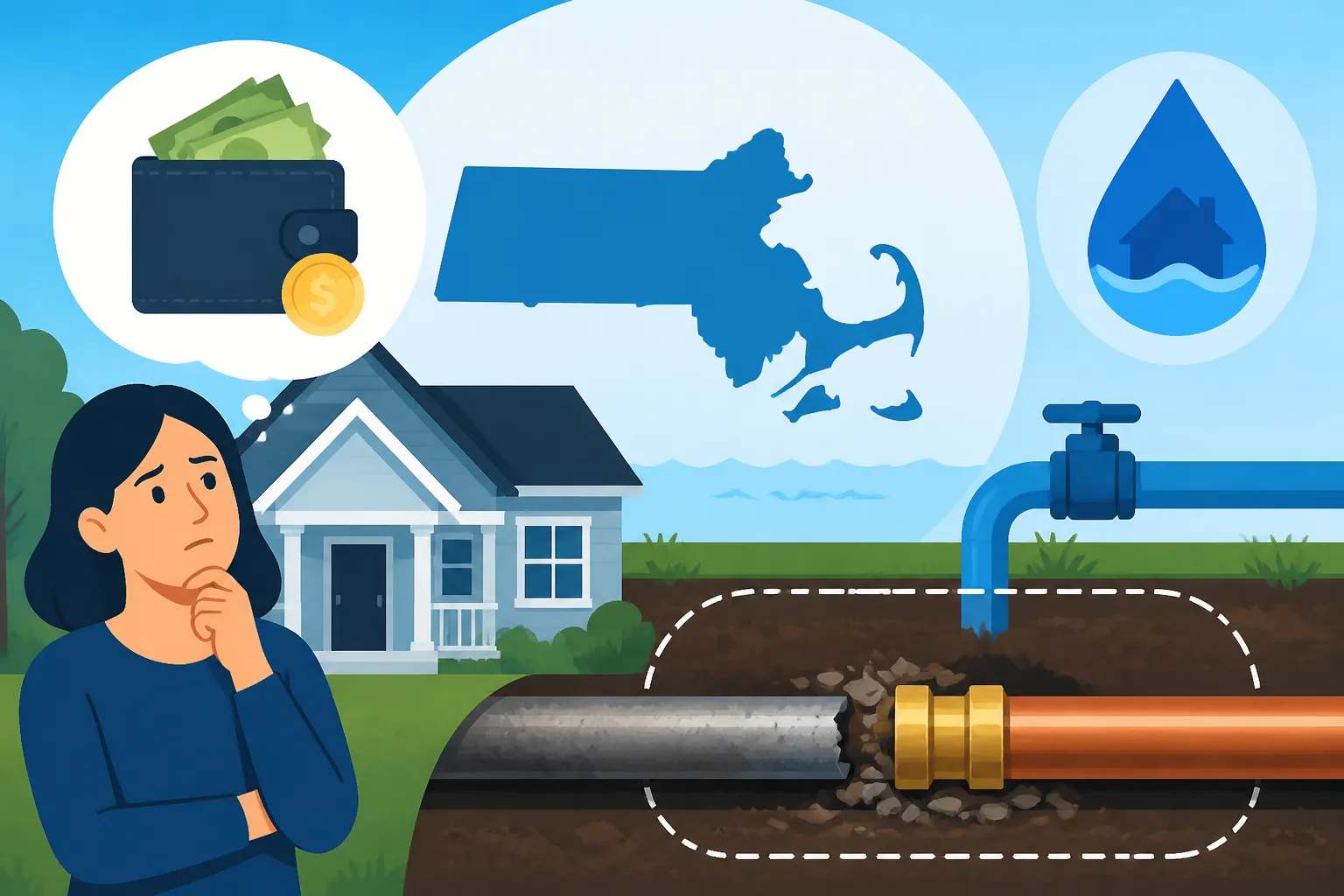
A lead service line can cross both public and private property, so the replacement bill may not fall neatly on one side of the curb. If you own a Massachusetts home, the key questions are whether the line is lead, what your water supplier’s project covers, and whether funding reaches your household directly or through the supplier.
What determines a homeowner’s share of the cost?
There is no single homeowner price that applies across Massachusetts. A supplier may organize replacement work as a local project, and the way that project is funded and designed affects whether work on the private side is included. Your possible out-of-pocket cost depends on the scope offered for your address, the supplier’s policies, and any agreement you are asked to sign.
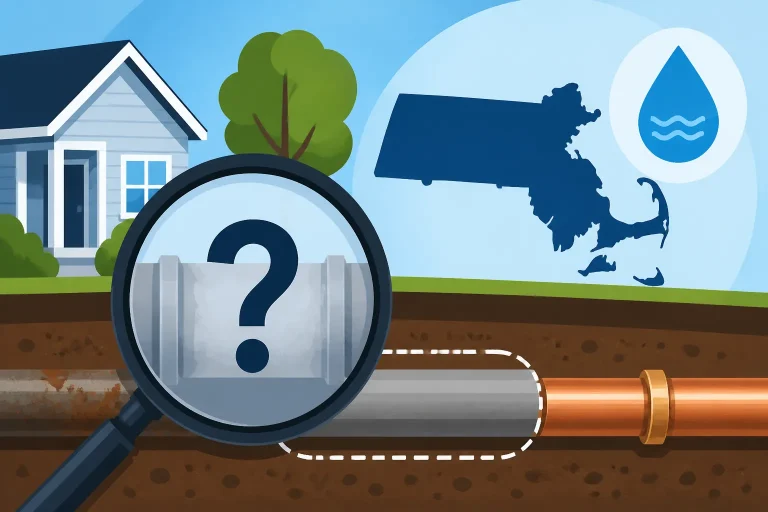
A service line usually has a public side and a private side. The public side runs from the water main toward the property; the private side continues toward the building. The ownership boundary and responsibility for each portion can vary by location. A line may also have different materials on the two sides, so establishing what is present at your address matters before assuming that a replacement program covers the whole connection.
Massachusetts drinking water regulations do not require consumers to replace their lead service line, according to the Massachusetts Department of Environmental Protection. That means a homeowner should not assume that the state rule itself makes them responsible for paying for a replacement. It also does not mean that every water supplier must offer the same cost arrangement or that a homeowner will never face charges under a local agreement. Ask the supplier to explain its policy for your property and identify the terms that apply to the proposed work.
A cost estimate can include more than the pipe itself. Depending on the project, the work may involve locating and confirming the line material, planning the route, excavation, replacing pipe, restoring affected surfaces, and coordinating access. Do not assume that every project includes every item, or that the same contractor handles every part. Request a written scope that identifies what the project will do, which side of the service line it includes, and who pays for each part.
| Cost question | Why it matters | What to confirm |
|---|---|---|
| Is the service line confirmed as lead? | The project may depend on the material recorded for the address. | Ask how the material was identified and whether the record is complete. |
| Does the work cover the public side, private side, or both? | A replacement on only one side may leave part of the service line in place. | Request the proposed work limits in writing. |
| Who pays for the private-side work? | A supplier project may cover private property under its design, but coverage can vary. | Ask whether the homeowner pays anything directly or agrees to other terms. |
| What restoration is included? | Digging may affect landscaping, paving, steps, or other surfaces. | Ask what will be restored, by whom, and what is excluded. |
| Does funding go to the household or the project? | Public financing or loan forgiveness does not automatically mean a direct homeowner payment. | Ask how the supplier applies funding and whether it changes your bill. |
| What happens if the work cannot be completed as planned? | Access, site conditions, or other issues may affect the scope. | Ask who makes decisions and how added work or delays are handled. |
The table is a starting point, not a price quote. The supplier is the best place to ask which project terms apply to your address. If you have a letter describing your line as lead, galvanized, or unknown, A Service Line Letter Arrived: Next Steps for Massachusetts Residents can help you sort out what the notice does and does not establish.
How Massachusetts funding may affect the project
Massachusetts has a funding route intended to help public water systems plan and carry out lead service line work. The Massachusetts Clean Water Trust and Massachusetts Department of Environmental Protection say the program offers time-limited 0% interest DWSRF financing and loan forgiveness for lead service line planning and construction. The program is intended to support system projects; a homeowner should not treat it as an automatic personal grant or reimbursement.
The Massachusetts DWSRF accepts rolling applications for work to inventory, plan, and fully replace LSLs and GRR service lines, according to the Massachusetts Clean Water Trust and Massachusetts Department of Environmental Protection. That application process is for water systems undertaking eligible work. It does not tell a particular homeowner whether a supplier has applied, received financing, included their property, or set a no-cost arrangement for private-side work.
Construction loans typically include full LSL replacement work on the public and/or private side, depending on program design, according to the Massachusetts Clean Water Trust and Massachusetts Department of Environmental Protection. The phrase “depending on program design” is important: funding can support work on private property without establishing that every household has identical coverage. Ask the supplier how the project’s design treats your side of the line and whether any cost, access, or restoration terms apply to you.
The Massachusetts Clean Water Trust and Massachusetts Department of Environmental Protection state that LSL project loan forgiveness has been 40%, with future projects expected to receive the same amount subject to available funds. That is project-level funding information, not a statement that homeowners receive 40% of their personal replacement costs. How a supplier uses financing and loan forgiveness, and whether it changes what residents pay, depends on the project and its local terms.
A useful way to understand the distinction is to separate the funding path from the household cost path:
- A water system identifies and plans eligible lead service line work.
- The system applies for financing under the program and develops a project scope.
- The project may include work on the public side, private side, or both, depending on its design.
- The supplier explains what the project means for each affected address, including whether the homeowner is asked to pay or sign an agreement.
Those steps describe the general relationship between project funding and household decisions; they do not guarantee that every system follows the same schedule or offers the same terms. For the current project status and local conditions, contact the water supplier through its official website. If the supplier serves water wholesale and your town manages local service lines, ask which organization is responsible for the project details at your address. Wholesale MWRA Water, Local Pipes: Who Handles Which Part of Delivery explains why water supply and local pipe responsibilities can sit with different organizations.
What homeowners should confirm before agreeing to work
Before you make a decision, get the basic facts about the line, the project, and any requested payment or permission. A supplier’s inventory is useful, but an inventory label is not necessarily a physical inspection result or a test of water at your faucet. If the record says “unknown,” ask what steps the supplier uses to confirm the material and whether the project can investigate it. What Unknown Means in a Massachusetts Service Line Inventory explains the limits of that label.
Ask for the proposed scope in writing. A useful description should make clear which portions are being replaced, what materials are being removed, how the property will be accessed, and what restoration is included. If the supplier describes the work as a full replacement, confirm that the term includes both sides of the line in your case. Full replacement is a central emphasis of the Massachusetts funding program, but the precise work at your home still depends on the project design.
Before signing an access form, permission, or cost agreement, read what it says about responsibilities. Look for any payment terms, restoration limits, access requirements, liability language, and provisions for unexpected conditions. If something is unclear, ask the supplier to explain it in writing before work begins. Do not rely on a general statement that the program is funded or that the work is “covered”; ask what that means for your address.
A practical list of questions to send the supplier:
- What material is recorded for each portion of my service line, and how was it identified?
- Is the planned work intended to replace the complete service line or only a section?
- Does the project include work on my private property?
- Will I be charged for any part of the work, restoration, inspection, or follow-up?
- Does the project require my written permission or an agreement?
- Who is responsible for restoring landscaping, paving, or other disturbed areas?
- What happens if the crew finds a different material or an unexpected site condition?
- How will I receive confirmation that the replacement is complete?
- What should I do about flushing, filters, or other household steps after the work?
The answers should be specific to your supplier and project. If the supplier says the private-side work is not included, ask whether another local program or a future project is planned, and request the basis for any cost assigned to you. Massachusetts regulations do not require consumers to replace their lead service line, according to the Massachusetts Department of Environmental Protection, but a local proposal may still involve choices and agreements that deserve careful review.
Replacement is not the same as a faucet-water test. A service line inventory can help identify pipe material, while a water sample reflects conditions at the time and location sampled. Neither automatically answers every question about indoor plumbing or exposure. For a home-specific investigation, see Does a Service Line Inventory Show Whether Your Tap Water Has Lead? and Getting a Home-Specific Lead Answer for Your Massachusetts Tap.
If a replacement is proposed, ask how the supplier will handle the transition and what instructions it recommends after the work. Avoid assuming that a filter, flushing instruction, or other step substitutes for clarifying whether the line was fully replaced. Flushing and Filtering After a Lead Service Line Is Replaced covers follow-up considerations, while Partial Lead Line Replacements: Generally Not Allowed in Massachusetts provides context on why replacing only part of a lead line can be a concern.
How to think about household costs and next steps
When reviewing a possible cost, separate the direct charge from the broader project terms. A direct charge is an amount you are asked to pay. Other terms may affect your property without appearing as a simple line item, such as access permission, restoration responsibilities, or the obligation to coordinate work. Ask the supplier to identify both.
If the supplier says there is no direct charge, confirm whether that applies to all work described or only a particular portion. Ask whether restoration is included and whether there are conditions that could lead to an additional charge. If the supplier says you may have to pay, ask for an itemized explanation and the policy or agreement that supports the charge. A verbal estimate may not cover every part of the project.
If no replacement is currently planned, keep a record of the supplier’s response and ask how to receive updates. A service line record can change as the system gathers information. You can review Seeing Your Supplier’s Service Line Inventory in Massachusetts for ways to understand what an inventory shows and How to Check Your Address for a Lead Service Line in Massachusetts for address-level checking.
A sensible sequence is:
- Find the latest service line record for your address.
- Ask the supplier to confirm the material and the source of that information.
- Request details of any proposed replacement, including whether both sides are covered.
- Get any homeowner payment, restoration, or access terms in writing.
- Compare the written terms with what the supplier says about project financing.
- Keep the notices, test results, agreements, and completion records together.
This sequence helps prevent a common misunderstanding: a system’s access to low-interest financing or loan forgiveness is not the same as a promise that an individual household will receive cash or have every related expense covered. The funding program is designed around system planning and construction, and project details determine how the work reaches private property.
If you are concerned about water quality while waiting for more information, use a test and any filter decision for the question each can actually answer. A line-material record does not measure lead concentration at the tap, and a water test does not identify every pipe in the route from the main to the faucet. A Lead Pipe Warning Letter Is Not a Test Result, So Get a Real One explains that distinction. For filter decisions, start with the result and verify that a product’s certification covers the specific contaminant and use; A Household Guide to Filtering Lead From Massachusetts Tap Water discusses those considerations.
For questions about possible health effects, contact your local health department or a medical professional. For information about a supplier’s line inventory, planned work, or charges, contact the supplier through its official website. If responsibility is unclear because a town, regional system, or wholesale supplier is involved, ask each organization which one handles the service line project for your address.
Frequently Asked Questions
Does Massachusetts require homeowners to replace lead service lines?
No. Massachusetts drinking water regulations do not require consumers to replace their lead service line, according to the Massachusetts Department of Environmental Protection. A supplier may still explain a local project or agreement, so ask how its terms apply to your property.
Does DWSRF financing mean the work is free for homeowners?
Not automatically. The financing and loan forgiveness support eligible water-system planning and construction. Whether a household pays anything depends on the project design and the supplier’s terms. Ask for a written explanation of any homeowner charge or no-cost offer.
Does the program cover the private side of a service line?
It may. Construction loans typically include full LSL replacement work on the public and/or private side, depending on program design, according to the Massachusetts Clean Water Trust and Massachusetts Department of Environmental Protection. Ask the supplier whether your private-side work is included.
Is project loan forgiveness a homeowner rebate?
Not necessarily. The stated loan forgiveness applies to LSL projects, not automatically to a homeowner’s personal expenses. Ask the supplier how project financing affects the household cost, if at all.
What should I do if my service line is listed as unknown?
Ask the supplier what the unknown designation means for your address and how the material can be confirmed. Do not treat an unknown record as proof that the line is lead-free or as a water test result. What Unknown Means in a Massachusetts Service Line Inventory covers the distinction.
Sources
- Massachusetts Department of Environmental Protection (checked November 13, 2026)
- Massachusetts Clean Water Trust and Massachusetts Department of Environmental Protection (checked November 13, 2026)
Disclaimer
This article is for general informational purposes only and does not constitute professional advice. Laws, prices and regulations vary by location and change over time. Consult a qualified professional for guidance on your specific situation. Massachusetts Water Guide is not a government agency or water utility and is not affiliated with any public water system.